The Page Thought Leadership Journey
October 6, 2026



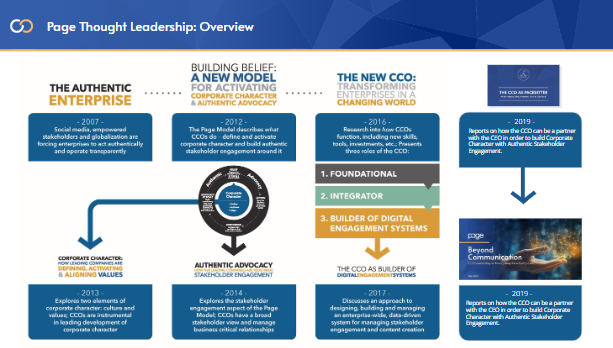
This brief summary is intended to cover the main points of the major thought leadership reports issued by the Page Society.

The Authentic Enterprise – 2007
In the face of:
To establish a distinctive brand and achieve long-term success, an enterprise must:
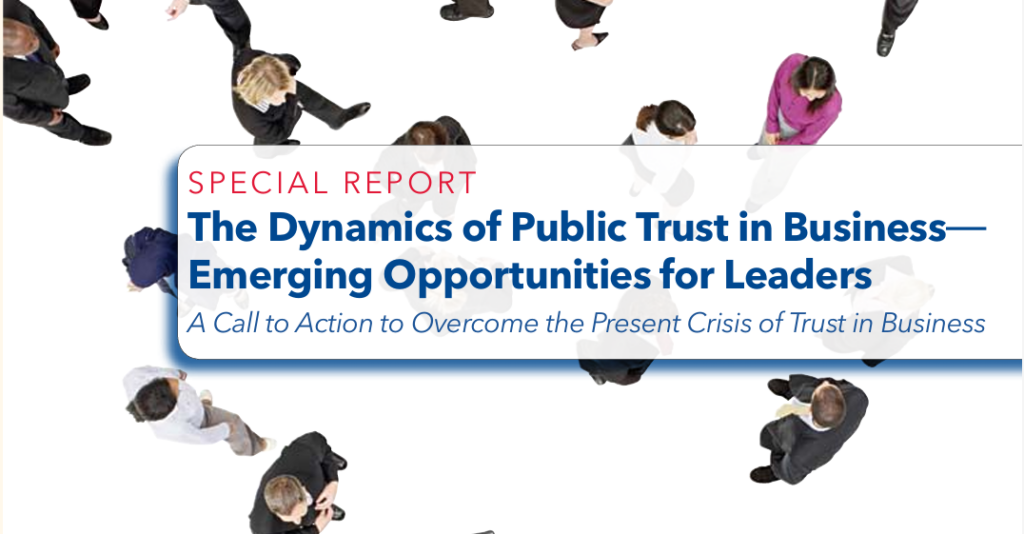
2009 Report on Public Trust in Business
This report proposes an approach grounded in the general principle that trust creation is really an exercise in mutual value creation among parties who are unequal with respect to power, resources, and knowledge. A core condition for building public trust is the creation of approaches that create real value for all interested parties—businesses and public alike.
Beyond these fundamentals, the report recommends concrete actions that business leaders can take with respect to building mutuality, balancing power, and creating trust safeguards:
The report gives several examples of organizations that are building trust successfully and notes that the trend may result from businesses making social good a part of how they conduct their businesses.
Building Belief: The Page Model – 2012
The Page Model creates a framework for creating an Authentic Enterprise:
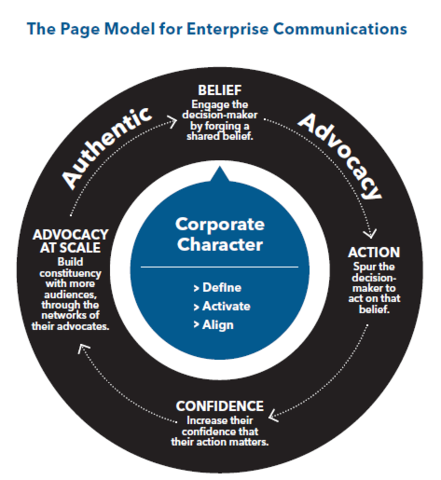
The CCO is expected to help the enterprise to define its corporate character by bringing in stakeholder perspectives and advocating for definitions of purpose, mission and values. Then, the CCO must work with leadership to activate the Corporate Character by building the strategy, business model, operating plans, corporate culture and corporate brand.
The CCO works with stakeholders during this process to bring in their perspectives and to convert them to supporters of the approach.
This report describes the three basic skills necessary for the CCO to provide the leadership required to succeed in building Corporate Character and Authentic Engagement:
This report digs deeper into how the CCO can be a partner with the CEO and the executive leadership in four areas in order to build Corporate Character with Authentic Stakeholder Engagement.
Here, we assess the state of the role of the CCO in the wake of the progress achieved so far and in the context of massive disruption driven by accelerating technological change that is disrupting entire industries, increasing populist backlash against ESG and DEI, a global pandemic that disrupted supply chains, and increasing political polarization in many countries. Our findings:
CCOs are now pivotal in defining (or redefining) mission and purpose, decoding societal trends, fostering innovation and guiding companies through times of crisis. Their unique multistakeholder orientation is indispensable for businesses aiming to achieve long-term, sustainable success in an increasingly complex environment.
The remit of many CCOs has widened considerably in areas such as sustainability, public affairs, brand and marketing, people and culture, societal responsibility and diversity, equity and inclusion (DE&I).
While technology facilitates deeper insights and more personalized stakeholder engagement, CCOs are also tasked with navigating the ethical implications of AI and ensuring their teams are equipped to leverage these advanced tools effectively and responsibly.
The expanding scope and increasing complexity of the CCO’s role present challenges related to skills, resources and team well-being. As CCOs pilot their functions through this transformative era, there is a pressing need for strategic investments in team development, technological tools, and supportive work environments that foster innovation and resilience.
The Page Navigator Benchmarking Reports equip you with peer-driven data to advocate, plan, and lead with confidence. Based on insights from more than 150 CCOs across sectors, regions, and company sizes, it goes beyond budget and headcount to reveal how today’s most effective teams are structured, resourced, and measured, and what’s changing next.
Built on data from 179 senior communications leaders across 23 countries, it helps leaders understand where the function stands today, identify what may need to change and learn from peers navigating similar challenges.
Built by and for CCOs, this first-of-its-kind study offers the clearest picture yet of how the funct…