- Corporate Character


A good company earns trust through the character of its leadership, the decisions it makes, and the value it creates for society. Are companies asking society for more trust than their actions deserve?
It's a deceptively simple question, but one that stayed with me throughout my recent visit to Santiago, Chile.
Throughout the week, I met with business and corporate affairs leaders, exchanged perspectives on our profession's evolving challenges, and participated in several events focused on the role of business in society.
My visit was part of Page's growing collaboration with ICARE (Instituto Chileno de Administración Racional de Empresas), a leading Chilean nonprofit that brings business leaders together to foster dialogue and promote better business practices.
What struck me was how closely the challenges facing Chilean leaders mirror those we're hearing across the global Page community.
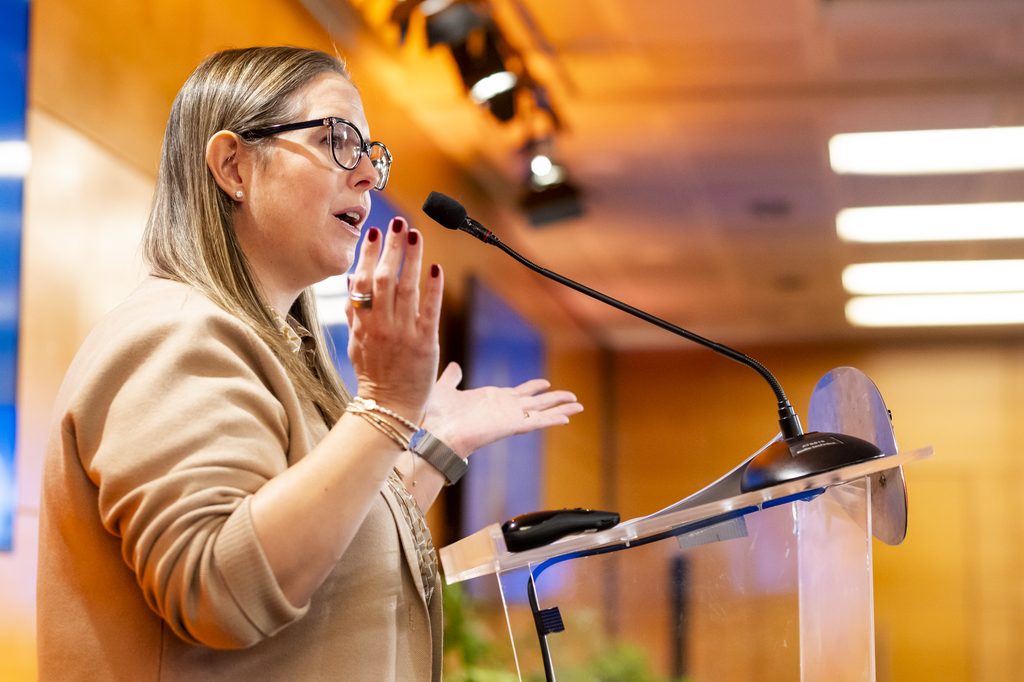
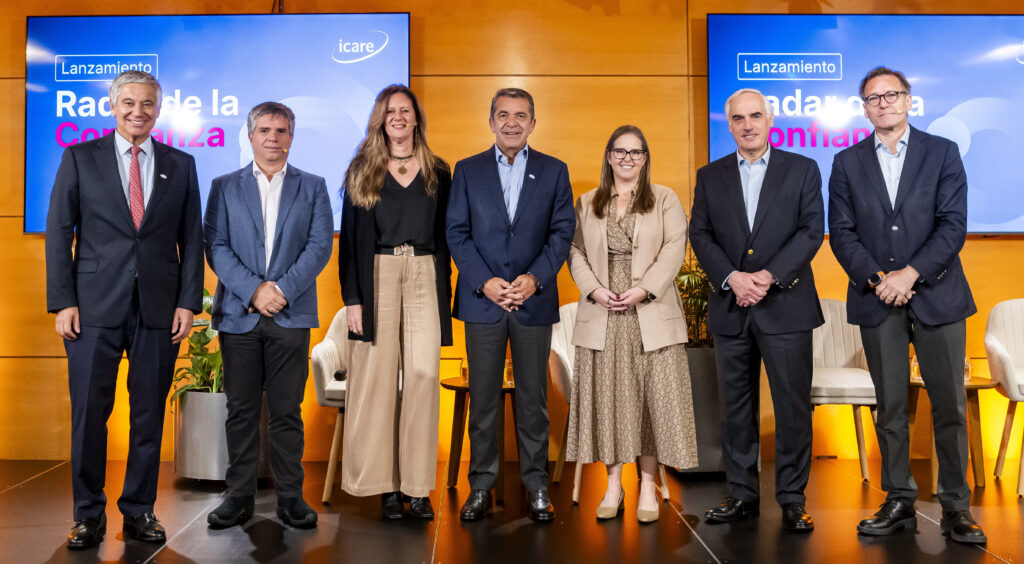
One highlight was delivering the keynote at the launch of ICARE's Radar de la Confianza (Trust Radar), an initiative bringing together research from 15 institutions to better understand trust in Chile.
Rather than producing another standalone study, ICARE is connecting existing research to reveal gaps between how organizations see themselves and how others experience them.
The premise resonates with Page's longstanding work on corporate character: trust cannot simply be claimed or communicated into existence. It must be earned.
During my keynote, I shared findings from Page's 2026 Confidence in Business Index, developed with The Harris Poll and launched at Davos. Across 14 markets, 61% of respondents considered it very important for large companies to generate positive economic impact for everyone, yet only 31% expressed high confidence in their ability to deliver.
That 30-point gap illustrates a global challenge: expectations of business are outpacing confidence in its ability to meet them. While Chile wasn't included in the study, the findings reinforce the importance of understanding the distance between corporate ambition and people's lived experiences.
For decades, the Page Principles have reminded us to tell the truth, prove it with action and listen to stakeholders. The question isn't simply how companies can increase trust, but what they must do differently to become more worthy of it.
Perhaps the most revealing moment came after the keynote, when nearly 100 corporate affairs and communications leaders participated in discussions around a deliberately uncomfortable challenge:
What trust gap are we failing to see, and what question should our organizations be asking?
Across 11 tables, participants generated 98 questions.
Eight tables focused on the disconnect between what organizations say and what they actually do. Others questioned whether companies genuinely listen to stakeholders, act on feedback or acknowledge mistakes.
But one question particularly stayed with me: Do we actually have the right leaders to build the trust we're asking society to place in our organizations?
It's uncomfortable, but important. Trust depends on the people making decisions, the behaviors they model and the culture they create.
What encouraged me was that the conversation moved beyond reputation management toward leadership, governance and business decisions.
Another idea that resonated throughout my visit was moving from a company's license to operate to its license to win. Trust shouldn't simply protect organizations from risk. When earned consistently, it can strengthen relationships, enable innovation and create long-term value.
But that license to win must be deserved.
Throughout my conversations in Chile, another theme emerged: the expanding mandate of corporate affairs leaders.
Geopolitical uncertainty, changing societal expectations, artificial intelligence and a transforming media landscape are reshaping our profession.
Page's 2026 Navigator research found that nearly two-thirds of senior communications leaders reported expanding responsibilities, while many still lack the resources and capabilities to meet those expectations.
That's why Page is focused not just on understanding these changes, but on helping members respond through benchmarking, practical tools like our Functional Framework, and trusted peer connections.
Identifying the challenges is only the beginning. What matters is what we do with that knowledge.
Beyond the presentations, what made this visit especially meaningful was connecting with leaders committed to advancing our profession.
One of my biggest takeaways was a reminder that while the principles guiding us are universal, there is no one-size-fits-all approach to putting them into practice.
Throughout the week, I kept returning to the same answer: It depends.
It depends on the industry, organizational culture, business model, market, stakeholders and individual leaders.
The challenges may be similar across organizations and countries, but the right responses aren't necessarily the same.
That's what makes exchanging perspectives so valuable. We don't learn from peers to replicate their playbooks, but to challenge our assumptions and make better decisions for our own circumstances.
It's also central to Page's approach: combining global research, practical frameworks and trusted relationships to help leaders navigate their unique challenges.
If my conversations in Chile reinforced one thing, it's that identifying trust gaps isn't enough. Leaders must act on them.
That means:
Ultimately, corporate affairs leaders have an opportunity not just to identify trust gaps, but to help close them.
I'm especially grateful to the ICARE team, its Corporate Affairs Circle, Mercado Libre, LLYC and the many leaders who shared their perspectives throughout my visit. The Radar de la Confianza demonstrates the power of collaboration in turning research into a foundation for better decisions.
I'm also grateful to Aberje (the Brazilian Association for Business Communication) for supporting Page's growing engagement across Latin America. I look forward to continuing our collaboration with ICARE, Aberje and other leaders throughout the region.
I left Chile reminded that trust isn't simply the product of a compelling narrative. It's built through corporate character, the decisions and actions of leaders, the messages that resonate with stakeholders and the experiences organizations create.
For those of us leading corporate affairs, that represents both an enormous responsibility and an extraordinary opportunity.
Trust is the outcome. Corporate character is the foundation. And our decisions and actions are the proof.

The Scriptorium Initiative in collaboration with Page Society Most conversations about AI focus on t…