- Artificial Intelligence
- blog




Disclaimer: Member posts reflect personal views, not necessarily those of the Page Society.
Earlier this month, we joined a Page Collaboration Hour to share findings from Generative Pulse’s latest What Is AI Reading? report. The session generated some of the most energetic discussion we've seen in a peer forum on Generative Engine Optimization (GEO), or as some people refer to it Answer Engine Optimization (AEO).
Our conclusion: As much as everyone’s talking about GEO, the playbook is still being written. There's no consensus yet on what it looks like, who owns it, let alone the best way to measure and understand it over time. CCOs must lead in this time of uncertainty.
We've been running this research since July 2025, and while the GEO landscape has shifted constantly, a few fundamentals have held. Here's what CCOs need to know.
Earned media continues to be the foundation.
Across more than 30 million AI citations analyzed between July 2025 and June 2026, roughly 99% came from non-paid sources. Journalism alone accounted for about 27% of all citations consistently, across every wave of the study, with paid and advertorial content cited in less than half a percent.
Communications leaders have spent years making the case for earned media against the gravitational pull of paid budgets. This data makes that case clear. The sources feeding AI answers are the same ones PR teams have spent careers cultivating: credible journalism, authoritative third-party coverage, expert commentary. GEO is the maturation of what earned media was always supposed to do.
The providers behave differently.
ChatGPT includes citations in 96% of responses. Claude cites in only 55%, but averages 13 sources when it does, more than double ChatGPT's depth. Gemini pulls heavily from Reddit. Content licensing deals between publishers and AI providers also create differences in which sources are frequently cited.
For comms teams, this means AI visibility isn't a single target. The media ecosystem shaping what ChatGPT says about a brand is largely separate from the one shaping what Gemini says, so each LLM must be approached differently.
A new variable: publishers are starting to control access.
Earned media remains overwhelmingly the foundation of AI citations; that's not changing. But which outlets stay readable to AI is becoming a variable worth watching.
We've begun to see individual publishers change their crawler settings, updating robots.txt files to disallow the AI agents that read and cite their content. The effect can be dramatic: In our data, a publisher's share of AI citations can collapse almost overnight after such a change, falling from a steady presence to near zero in a matter of weeks. These shifts rarely come with an announcement; they surface only if you're tracking citation patterns over time.
What's notable is that some of these moves come from publishers that have already struck content licensing deals with major AI platforms. So this isn't simply a refusal to engage with AI companies on principle. It looks more like publishers drawing a sharper line between licensed access and free access, closing the open door while keeping the paid one open.
The bigger opportunity for CCOs
Credibility, authority, and timeliness are the measures of AI visibility. They're also the capabilities communications leaders have spent their careers developing: building trusted relationships with journalists, establishing executives as credible voices, and knowing how to get the right story out at the right moment.
Everyone is learning the technology, marketers and communicators alike, which means the technical playing field is leveling quickly. The advantage for communications leaders is the judgment, storytelling, and media instincts that determine which stories earn attention and credibility in the first place.
That's already what they do.

This blog is part one of a three-part series based on Bob Pearson’s book, “The Compass: How to N…
The Scriptorium Initiative in collaboration with Page Society Over the past weeks, we at The Scripto…
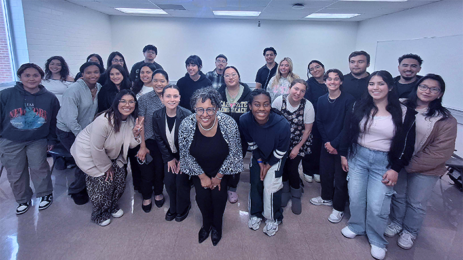
Page & ACEJMC Collaboration At Page, we believe the future of the communications profession depe…