- 2025 Annual Conference
Polarization, Trust & the Weaponization of Information
October 9, 2025



This summary pulls takeaways from Impact of Polarization on Business & What Can We Do About It (Chatham House), Truth, Trust & Tech: Defending the Brands We Love (Chatham House) and Polarities at Play: Leading Through Complexity.
The Main Stage
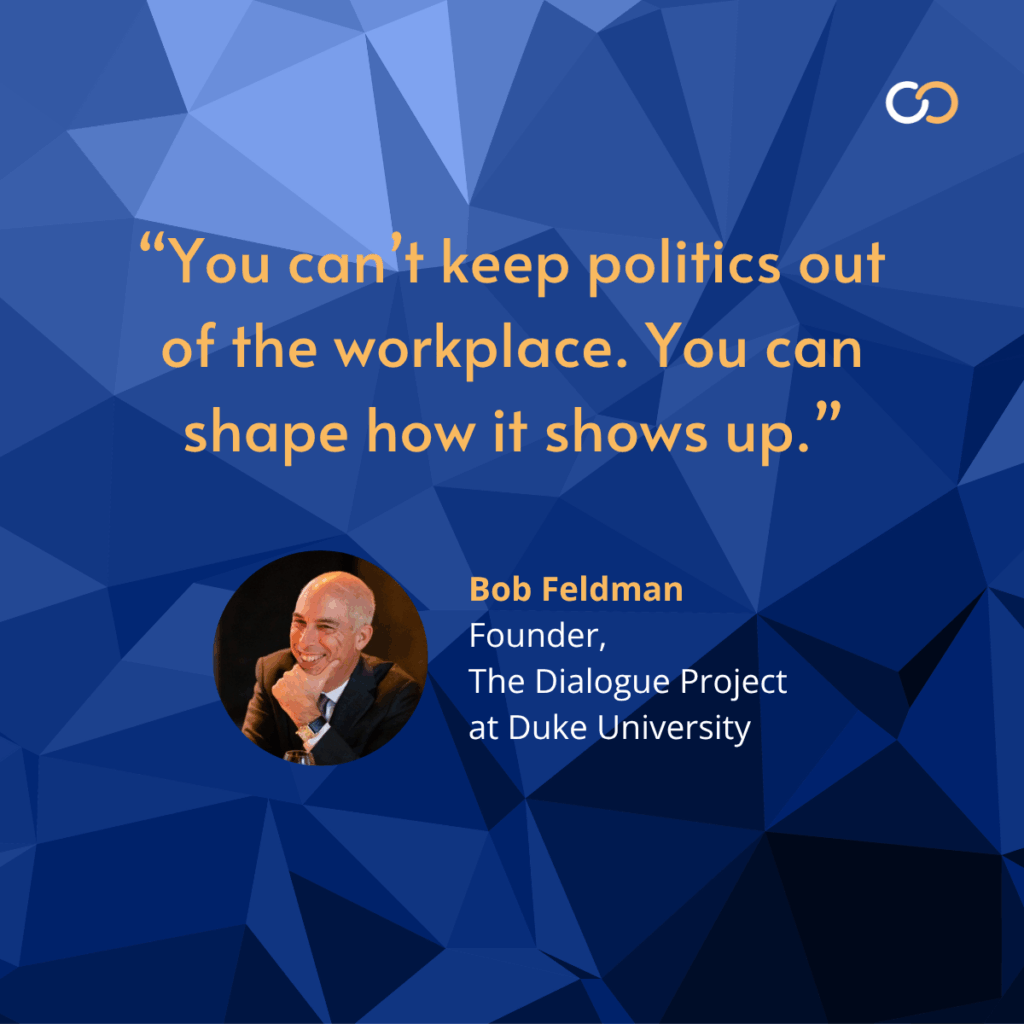
Polarization leads to incivility in the workplace, and is a costly issue for organizations. Research from SHRM suggests that the collective daily loss by U.S. organizations from reduced productivity and absenteeism due to incivility could total over two billion dollars. Chatham House Sessions at the 2025 Page Annual Conference underscored that these divisions and distrust are reshaping the workplace as much as the public sphere. For communicators, the challenge is not to “keep politics out of the workplace” (an impossible goal), but to build the conditions for constructive, civil dialogue.
Impactful Quote
From the Breakouts and Questions
Why It Matters
Trust is the bedrock of reputation, yet both employees and external stakeholders increasingly default to vindication and validation rather than listening. For CCOs, this means doubling down on skills, guardrails, and rituals that turn polarization into productive dialogue rather than paralyzing conflict.
To Take Back with You
What Members are Saying
From Q&A Discussions
Q: “I’m curious—what are the one or two things you would recommend that don’t require regulation to make a meaningful macro change against disinformation, outside of just what we can do when we go back to our jobs?”
A: “You don’t want the government deciding what’s true or false. The goal is to get trusted information out consistently and quickly. That requires collaboration and discipline across organizations, not waiting for regulation.”
Q: “Given how polarized everything has become, how can leaders encourage political dialogue at work without it turning toxic?”
A: “The data makes it clear: avoiding the topic is riskier than addressing it. When civility and psychological safety are high, more than half of political conversations are actually informative. When they’re low, only nine percent are productive.”
Q: “Where do we even start if employees are afraid to talk to each other about hard issues?”
A: “Start with small, structured spaces. We’ve found that modeling dialogue from the top—leaders showing empathy and curiosity—lowers the temperature and rebuilds trust.”

Click here to join this conversation.
Go Deeper

This summary pulls takeaways from Setting the Table: A Modern View of the VUCA World, Polarities at …
This summary pulls takeaways from Resiliency into Results: Closing Interaction (Chatham House), Lead…

Follow this link to download and share.…