- blog
- Communications



When I began working at the USC Center for Public Relations six years ago, we decided to conduct an annual industry survey to provide insights on the future direction of the industry that would be beneficial to seasoned professionals, as well as students.
At that time, one of our Board members suggested that we finally plant a flag that clearly defined what public relations stands for, much like Page is trying to do for CCOs. That seemed like a worthy goal and each year we tried to achieve it by asking provocative questions to communicators around the world about technology, ethics, diversity and many other topics. The results were always interesting, but they never really captured the essence of what PR is all about. Until this year.
In 2022, several powerful forces have forged a new path for our profession. The Pandemic placed communicators on the front lines informing customers and reassuring employees. Polarization infused every issue with controversy, from voting to vaccines. Purpose compelled many companies to step outside their comfort zone and take a public stand for the first time. And now, we’re engaged in the first global war where public relations is the primary weapon for winning hearts, minds and support.
As we discussed at the Spring Seminar, these powerful trends have propelled professional communicators into unfamiliar territory, without an app to guide them. Whether we work for a popular consumer brand or an unknown B2B service, we are all grappling with the same questions. When should we engage on societal issues that are important to our employees and our customers? How many issues can we realistically tackle? Which issues do we address, and which do we avoid? How will taking a position on a sensitive topic impact our bottom line? This year’s USC Global Communication Report, titled The Future of Corporate Activism, helps answer these questions.
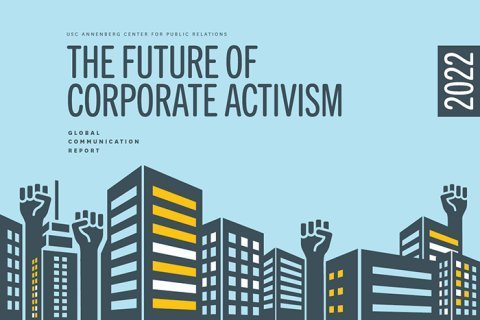
For example, while 77% of communicators believe polarization is a challenge to their organizations, 73% predict they will increase their engagement with social issues this year. The reason for that can also be found in the data. 83% think that business can play an effective leadership role in reducing the overall level of polarization in America. The results are already being felt within the company, with 43% saying that the business impact of actively engaging in social issues has enhanced brand reputation. The majority of companies are looking to their employees to determine their positions. All of them are making difficult daily decisions that have serious, long-term impacts on their companies and their communities. Public Relations and Communications have never been more complex, critical or challenging.
Taking action on topics this complex is not simple, and it should come as no surprise to Page Members that “authentic messaging” ranked the highest in most important components of an effective purpose-driven campaign. As the second Page Principle, Prove it with Action shows, navigating these challenges without authenticity will not be effective.
Whether you are a slacktivist, an activist or an ally, you will find this report interesting. It will make you think differently about the future of Communications and PR and the people who will lead it.

CCO Profile: Kirsten Gorsuch, UnitedHealthcare This is the first in a new series of posts featu…
Since the onset of the pandemic, business and society have collided like never before. Whether you c…